Edgewater Condo Guide For International Luxury Buyers

If you are buying luxury real estate from abroad, Edgewater can feel like both an obvious opportunity and a complex decision. You see the bay views, the new towers, and the proximity to Miami’s urban core, but you also need clarity on pricing, building types, carrying costs, and cross-border logistics. This guide gives you a practical framework for evaluating Edgewater condos as an international luxury buyer, so you can move with more confidence and less guesswork. Let’s dive in.
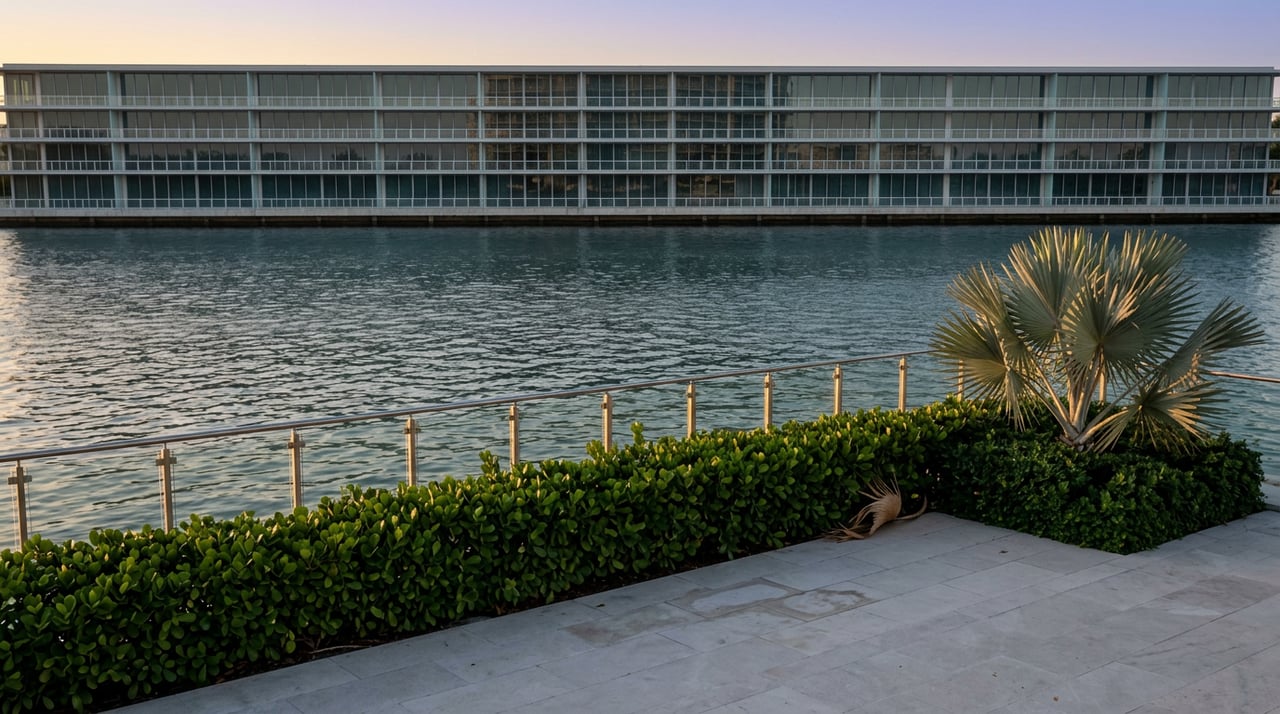
Edgewater is best understood as a bayfront high-rise market rather than a traditional neighborhood. According to City of Miami planning materials, the area sits east of Biscayne Boulevard along Biscayne Bay and includes a mix of residential towers, mid-rise buildings, and mixed-use development.
For many international buyers, that distinction matters. You are not buying Edgewater for single-family streetscape or suburban character. You are buying for water views, vertical living, and quick access to Downtown Miami, Brickell, the Design District, Wynwood, and Miami Beach.
International demand continues to shape South Florida real estate. In the latest National Association of Realtors international transactions report, Florida accounted for 21% of foreign-buyer purchases nationwide.
That same report found that the median foreign-buyer purchase price was $494,400, compared with $408,500 for all U.S. existing-home buyers. It also found that 47% of foreign buyers purchased for vacation use, rental use, or both, and 47% paid all cash. For buyers who live abroad, 60% purchased for vacation or rental use.
Those patterns align well with Edgewater. The area appeals to buyers who want a residence that can function as a lifestyle property, a part-time home, or a longer-term asset in a globally recognized market.
Luxury in Miami-Dade has moved up meaningfully. According to Miami Realtors, the county’s luxury condo threshold rose to $2.3 million in 2024, while the countywide median condo sale price was $420,000 in 2025.
Miami-Dade condo prices have also stayed even or increased for 14 consecutive years, based on the same source. That does not guarantee future performance, but it does help explain why many buyers view premium bayfront condo product as a durable segment of the market.
For you, the takeaway is simple. Edgewater luxury pricing should be evaluated within a countywide market where premium condo values have shown staying power and where global demand remains a meaningful force.
Edgewater’s luxury inventory is defined by newer high-rise towers, branded residences, and design-led buildings. In practical terms, your search will often come down to how a building handles views, privacy, staffing, parking, amenities, and overall lifestyle feel.
Most buyers compare buildings across a few core categories:
This is where Edgewater becomes more nuanced than it first appears. Two towers can sit along the same bayfront stretch and offer very different ownership experiences.
For international luxury buyers, Edgewater inventory is usually easiest to understand in three broad groups.
These buildings emphasize privacy, fewer residences, and a more residential feel. A strong example is Elysee, which is presented as a 57-story tower with 100 residences and no more than two residences per floor, with each residence oriented toward unobstructed Biscayne Bay views.
If privacy and lower density are high on your list, this kind of building may stand out. You may find the atmosphere calmer and more discreet than in a larger full-service tower.
These buildings are designed around scale, service, and resort-style living. Aria Reserve is a useful example, with twin bayfront towers, a 2-acre amenity program, private marina access, and pricing that currently ranges from about $1.3 million to over $12 million for one- to five-bedroom residences.
If you want a broad amenity package, this category may appeal to you most. Buyers in this segment often prioritize wellness spaces, pools, lounges, and a stronger hospitality-style environment.
These buildings tend to stand out through architecture, interiors, and brand identity. Missoni Baia is marketed as a 57-floor bayfront tower with 249 residences, about 200 feet along Biscayne Bay, and residences ranging from roughly 776 to 3,788 square feet.
For buyers who care deeply about design language and presentation, this category offers a more curated aesthetic experience. It can also be a useful way to narrow the search if your priorities are less about maximum density and more about branding, finish quality, and visual identity.
In Edgewater, the amenity list is often long, but not every feature has the same practical value. Commonly emphasized features in current development offerings include:
The right match depends on how you plan to use the condo. If the residence will serve as a second home, ease and service may matter most. If you plan to spend long stretches in Miami, privacy, storage, layout efficiency, and parking may become just as important as the public amenity package.
The purchase price is only one part of the decision. In a luxury Edgewater condo, your recurring ownership costs may include:
For international buyers, this is one of the most important sections of due diligence. Two condos with similar asking prices can have meaningfully different annual carrying costs.
Florida law requires structural integrity reserve studies for residential condominium buildings that are three habitable stories or higher at least every 10 years. Under Florida Statute 718.112, reserve funding for covered items can be supported by regular assessments, special assessments, lines of credit, or loans.
That means you should treat the association’s financials, reserve history, and budget as central parts of your review. For a luxury buyer, the quality of a building’s financial planning can matter almost as much as the views.
According to the Miami-Dade Tax Collector, property taxes are based on assessed value, minus any applicable exemptions, multiplied by the millage rate set by the taxing authority. Tax bills may also include non-ad valorem assessments.
For nonresident buyers, the practical takeaway is that annual taxes can vary significantly. Your final tax burden may depend on assessed value, exemption status, and any building-specific items appearing on the tax bill.
Closing costs also deserve attention early in the process. The Florida Department of Revenue states that in Miami-Dade, deed transfers are generally subject to documentary stamp tax of 60 cents per $100 of consideration, plus a 45-cent discretionary surtax per $100. Recorded mortgages are also subject to documentary stamp tax at 35 cents per $100 of indebtedness.
If you are financing, that mortgage tax becomes part of your real acquisition cost. It is a detail many international buyers prefer to model in advance rather than discover late in the transaction.
Because Edgewater is bayfront, flood review should be part of your early due diligence. Miami-Dade provides an official flood-zone map resource, and FEMA Flood Insurance Rate Maps are used to determine flood-insurance rates.
This is especially relevant in a waterfront high-rise market. Elevation, garage design, and water exposure can affect both risk and carrying costs, so it is smart to review flood designation before you are deep into negotiations.
Buying from abroad is very common in South Florida, but a smooth transaction still depends on preparation. The best approach is usually to assemble your closing team early, confirm identity and tax documentation well before closing, and verify wire instructions carefully.
For international buyers, the closing process tends to feel much easier when the logistics are organized from the start. This is especially true if the purchase involves financing, cross-border funds movement, or entity ownership.
Tax rules can also affect your exit strategy, not just your purchase. The IRS guidance on U.S. real property interests explains that buyers or other withholding agents generally use Forms 8288 and 8288-A when FIRPTA withholding applies, and buyer and seller TINs must be included. If a withholding certificate is requested, Form 8288-B may be used.
The IRS FIRPTA withholding overview also notes that a disposition of a U.S. real property interest by a foreign person is subject to withholding. In practical terms, if you are an international owner, your eventual resale may involve a different closing workflow than a domestic resale.
You do not need to become an expert in tax procedure before buying, but you should understand that resale planning starts on day one. A well-structured acquisition today can make a future sale much cleaner.
If you are narrowing down Edgewater condos from abroad, focus on these questions first:
This framework helps keep the search disciplined. In a market with strong visuals and polished marketing, structure is what protects decision quality.
Edgewater offers a very specific kind of luxury: bayfront towers, striking skyline views, and immediate access to the center of Miami. For international buyers, that combination can be compelling both as a lifestyle choice and as part of a broader real estate strategy.
The key is to look beyond the brochure. When you compare building type, service model, ownership costs, reserve health, and cross-border logistics together, you put yourself in a stronger position to buy well. If you want discreet, research-driven guidance on Edgewater and other top Miami luxury markets, Mark Yaffe offers a highly tailored approach for complex and cross-border acquisitions.
Stay up to date on the latest real estate trends.


Guiding Mark's clients step-by-step through a landmark, emotional financial transaction and easing the process by finding them the best deals, is what Mark does best for his local and international clientele. Mark leverages his knowledge of the Miami Real Estate market and relationships with brokers, developers, attorneys, and investors in order to do so.