Bay Harbor Boutique Condo Development Trends Explained
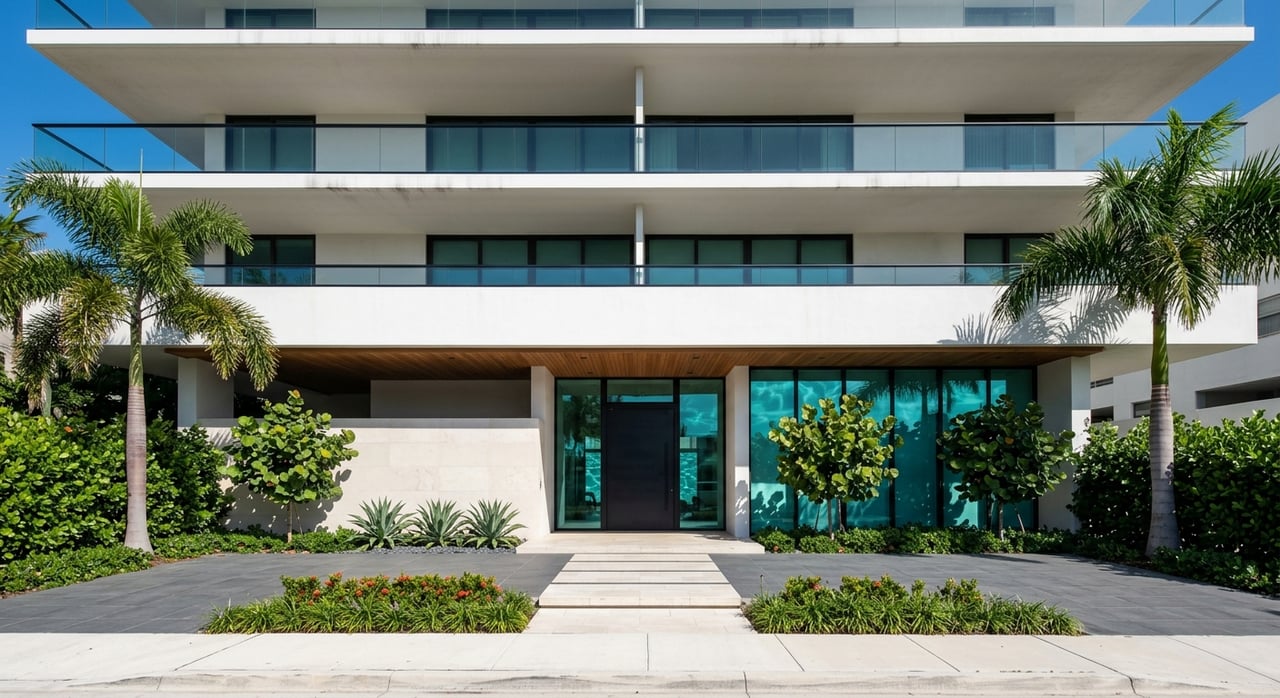
If you have been watching Bay Harbor, you have probably noticed a clear pattern: new condo projects here rarely aim to be the tallest or the biggest. Instead, they tend to be smaller, design-forward, and highly tailored to waterfront living. If you want to understand why that is happening and what it means for your next move, this guide will walk you through the development pipeline, the buyer profile it appears to serve, and the market story taking shape now. Let’s dive in.
Bay Harbor Islands is unusually small. The U.S. Census Bureau’s 2025 estimate puts the population at 6,021, and the town covers just 0.40 square miles.
That compact footprint matters. In a place with limited land, new development tends to arrive as site-specific projects rather than large-scale towers with hundreds of units.
The town also states that the community lies entirely in a floodplain. That means development and improvements must move through the town’s flood-damage prevention permitting framework, which adds another layer of structure to how projects come together.
Put simply, Bay Harbor is not set up to add inventory in a broad, mass-market way. The result is a pipeline shaped by low-rise buildings, smaller residence counts, and a more intimate feel.
Since 2021, media reports have described Bay Harbor as having about a dozen condo projects and roughly 400 planned or proposed units. More importantly, by 2024 and 2025, several projects had progressed into financing, construction, or topping-off milestones.
That shift is important if you are tracking the market seriously. It suggests Bay Harbor’s condo story is moving beyond concept and into actual delivery.
A few developments help explain the direction of the market.
La Baia North is one of the clearest examples of Bay Harbor’s resort-style positioning. It is planned as a 57-residence waterfront building with more than 20,000 square feet of amenities, private boat slips, yacht club access, and delivery expected to begin in 2027.
La Maré is organized across three waterfront collections. Regency includes 33 residences at 9927 East Bay Harbor Drive, Signature includes 9 residences at 9781 East Bay Harbor Drive, and Bay includes 9 residences at 10301 East Bay Harbor Drive, with marina access, rooftop pools, and private plunge pools in the Signature collection.
Bay Harbor Towers brings 44 residences to the Indian Creek waterway. The project includes a private marina, 13 boat slips, bayhouse and penthouse residences, and flow-through layouts, with recent coverage showing a topping-off milestone and a 2026 delivery target.
9900 West is a smaller waterside project with 23 residences. Its offering includes private boat slips, a landscaped rooftop pool deck, a spa, a fitness center, and more than 5,000 square feet of greenspace.
Origin Residences by Artefacto adds a branded design angle to the market. The project includes 27 waterfront residences, a rooftop pool, a waterfront aqua club, and nine boat slips, with a 2025 construction loan and late-2026 completion noted in official materials.
At the ultra-boutique end, Solina Bay Harbor and Mila Bay Harbor each have 9 residences. Solina emphasizes one to two homes per floor, flexible rental terms, boutique fitness, and a pool with cold plunge, while Mila includes 2- to 4-bedroom layouts, private elevator entry, a rooftop pool, a fitness garden, and a projected 2027 completion.
Then there is THE WELL Bay Harbor Islands, a wellness-branded mixed-use project at 1177 Kane Concourse. It pairs residences with offices and a club, with the official timeline pointing to August 2026.
The current Bay Harbor pipeline is not random. Several themes repeat across projects, and together they explain what this market is becoming.
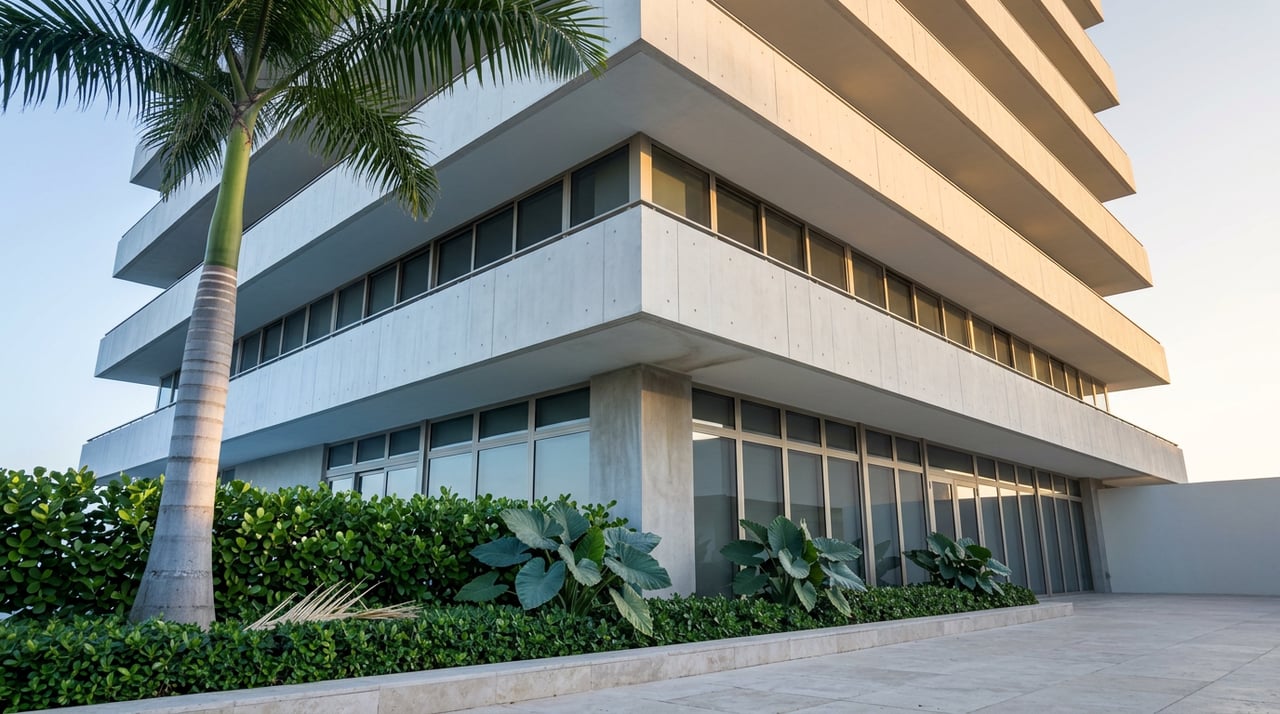
Most of the current projects sit in the 7- to 8-story range. Residence counts generally run from 9 to 57 units.
Even the larger new buildings remain boutique by broader Miami standards. That lower-density format is one of Bay Harbor’s defining traits.
For you as a buyer, that often translates into fewer neighbors, more privacy, and a building identity that feels more tailored than mass-produced. For you as an owner or seller, it can also create a more distinct position within the market.
Across the pipeline, floor plans mostly lean toward 2- to 4-bedroom homes. Private elevator foyers, large terraces, storage, and multiple parking spaces also appear frequently.
That design approach tells you a lot about the intended audience. These projects appear to be built more for full-time living and second-home use than for small, investor-style units.
This does not mean every buyer will be a primary resident. It does suggest that developers are prioritizing comfort, privacy, and liveability over sheer unit count.
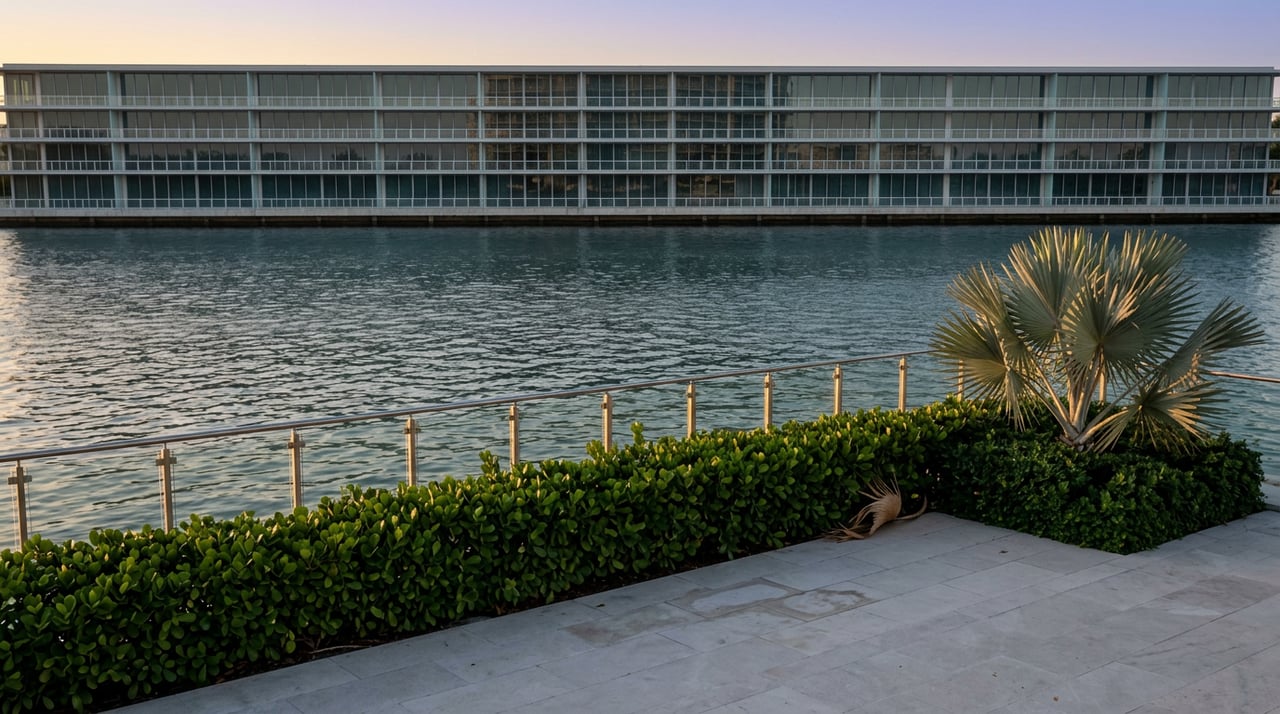
If there is one amenity story that shows up again and again, it is boating access. Private slips or marinas appear across La Baia North, La Maré, Bay Harbor Towers, and Origin Residences.
That consistency is not accidental. Boating is one of Bay Harbor Islands’ strongest lifestyle differentiators, and developers are clearly using it as a core part of the value proposition.
Not every project sits directly on the bay, though. Some are direct waterfront, some front the Indian Creek waterway, and others are more centrally located on the island while still selling proximity to the broader Bay Harbor lifestyle.
The second pattern is wellness. Rooftop pools, spas, fitness centers, hydrotherapy features, yoga or fitness gardens, cold plunge amenities, and service-oriented offerings show up throughout the pipeline.
THE WELL is the most visible branded expression of that trend. Still, the broader theme extends well beyond one project.
If you are comparing Bay Harbor to older condo stock or to more conventional towers, this matters. Developers are not just selling square footage. They are selling a daily living experience built around recovery, ease, and private amenity use.
One of the easiest ways to understand Bay Harbor is to compare it with larger neighboring condo markets. In North Bay Village, for example, Continuum Club & Residences is a 32-story tower with 198 residences and more than 50,000 square feet of indoor and outdoor amenity space.
Bay Harbor is moving in a different direction. Its pipeline is smaller, lower, and more intimate, with much lower residence counts and a stronger emphasis on privacy, boating access, and site-specific waterfront character.
That distinction matters if you are deciding where your lifestyle fits best. If you want scale and tower-style density, Bay Harbor may feel intentionally restrained. If you prefer a more limited-inventory setting with boutique positioning, that restraint may be the point.
For buyers, Bay Harbor’s development trend points to a market where scarcity and specificity matter. With a relatively small number of planned units spread across compact projects, each building can offer a distinct identity rather than blending into a larger field of lookalike inventory.
That can be especially relevant if you value waterfront access, larger layouts, and service-driven amenities. It may also matter if you are weighing a primary residence against a second home, since much of the product appears calibrated for both use cases.
For sellers and owners, the boutique nature of new inventory can shape how your property competes. In a market where buyers are comparing privacy, boating access, wellness amenities, and overall building scale, positioning becomes more nuanced than simply quoting a price per square foot.
This is where a research-led approach matters. Understanding which projects are under construction, which are nearing delivery, and which buyer preferences are becoming more visible can help you make sharper decisions in a small and evolving market.
The bigger story in Bay Harbor is not just that new condos are coming. It is that the town keeps producing a relatively small number of carefully calibrated projects that compete on intimacy, marina access, and service rather than on height or total unit count.
Given the town’s size, limited land base, and structured development environment, that pattern makes sense. It aligns with the physical realities of the location and with the kind of buyer these projects appear designed to attract.
If you are considering Bay Harbor, the key is not just to ask whether a new building is coming. It is to ask what type of building is coming, who it is built for, and how it fits into the island’s very specific development logic.
In a market this compact, those details can make all the difference. If you want discreet, research-driven guidance on Bay Harbor boutique condos, new development opportunities, or waterfront positioning across South Florida, connect with Mark Yaffe.
Stay up to date on the latest real estate trends.
Guiding Mark's clients step-by-step through a landmark, emotional financial transaction and easing the process by finding them the best deals, is what Mark does best for his local and international clientele. Mark leverages his knowledge of the Miami Real Estate market and relationships with brokers, developers, attorneys, and investors in order to do so.